Quick answer
If your website gets visitors but no leads, the problem is usually conversion, not traffic. The most common leaks are a hidden phone number, a vague headline, slow mobile pages, broken or long forms, no clear call to action, missing trust signals, and traffic from the wrong audience. Test every form, check your phone view and fix the biggest leak first.
Key takeaways
- Traffic without leads usually means a conversion problem, not a marketing problem.
- Check your site on a phone first, since that is where many visitors see it.
- Test every form and phone link yourself; broken ones are more common than you think.
- Measure leads by source so you know which traffic is actually worth paying for.
Why does my website get traffic but no leads?
Traffic is people arriving. Leads are people taking action. When the first number looks fine but the second is flat, visitors are arriving and then leaving without calling, booking or filling in a form.
There are only a few root causes. The visitors are the wrong people. The right people cannot quickly see that you solve their problem. Or they want to act but something gets in the way. The ten leaks below cover nearly every case we see when reviewing small business websites.
Before changing anything, confirm the basics. Are leads actually zero, or are they arriving somewhere nobody checks, like an old inbox or a spam folder? Send a test form submission right now and see where it lands.
The 10 most common conversion leaks and how to fix them
- The phone number is hard to find. Put it at the top of every page, make it tappable on mobile, and repeat it near the bottom. On phones, a sticky call button helps.
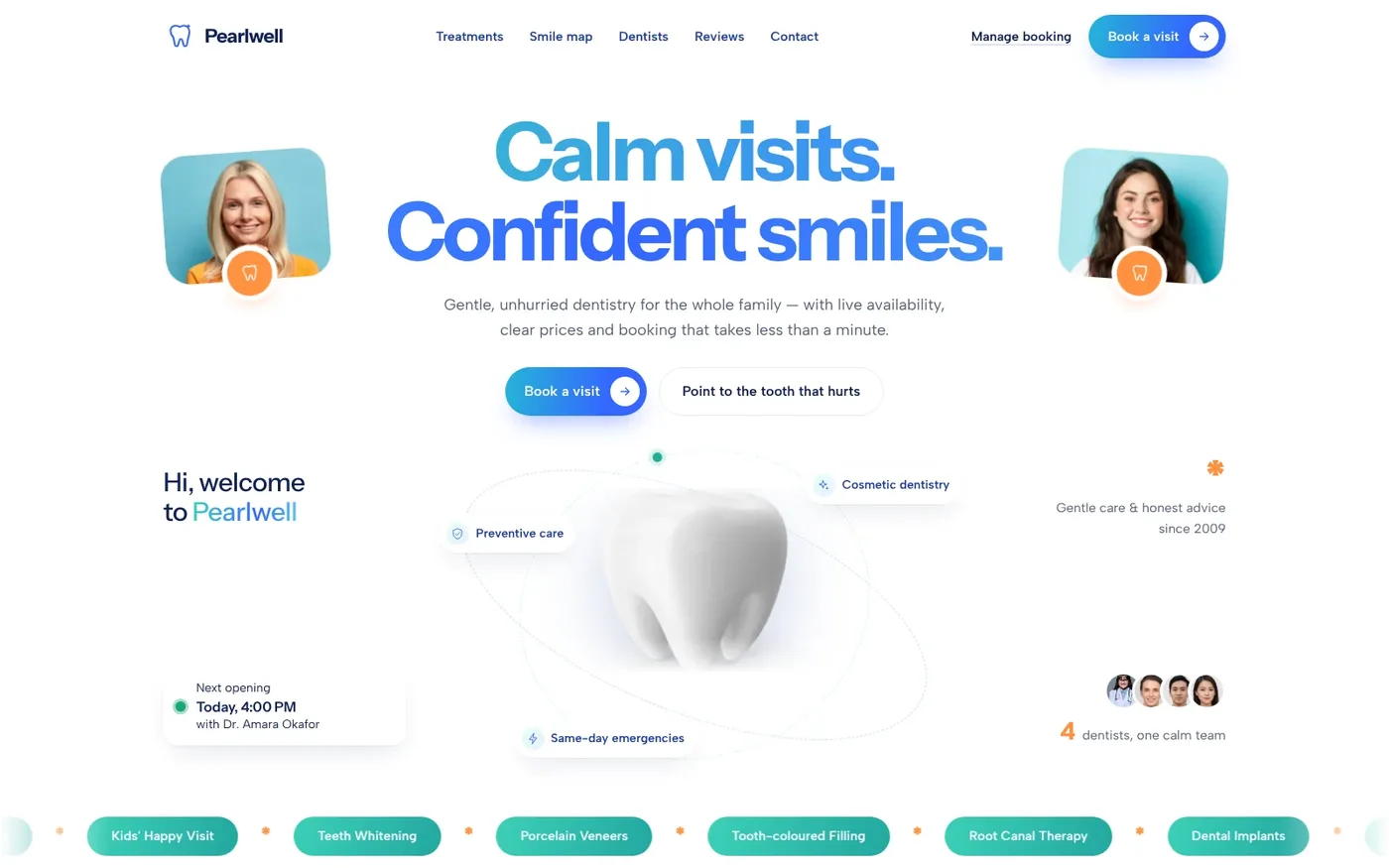
- The headline does not say what you do. "Welcome to our website" tells visitors nothing. Say what you do, for whom, and where. For example: "Emergency plumbing repair in Phoenix, same-day service."
- The site is slow on phones. Large images and heavy scripts make pages crawl on mobile data. Compress images, remove unused plugins and test with Google PageSpeed Insights.
- Forms are broken or too long. Forms fail silently more often than owners realize. Ask only for what you need to call back: name, phone, and a short message or service choice.
- No clear next step. Every page should end with one obvious action, like Call now, Book online or Get a free quote. Too many competing buttons cause hesitation.
- No trust signals. Show reviews, real photos of your team and work, licenses, insurance, years in business, and guarantees you actually offer.
- Prices and process are a mystery. You do not have to list every price. Give starting prices or ranges where you can, and explain what happens after someone contacts you.
- Service area is unclear. If visitors cannot tell whether you serve their town, many will leave. List your cities or ZIP codes plainly.
- Ads send people to the home page. Paid traffic should land on a page that matches the ad's exact service and offer, not a general home page.
- The traffic is the wrong traffic. Visitors from other countries, bots, job seekers or people searching for free information will never become customers. Check where traffic comes from before judging the site.
How to find which leak is costing you the most
You do not need to fix everything at once. Find the biggest problem first. Here is a simple diagnosis you can do in an hour:
- Look at the site on your phone as if you were a stranger. Within five seconds, can you tell what the business does and how to contact it?
- Open Google Analytics or your site analytics. Check which pages get the most visits and which channels send them: organic search, ads, social or referrals.
- Check the location report. If much of your traffic is from places you do not serve, your traffic number is misleading.
- Submit every form and tap every phone link on desktop and mobile.
- Watch a few session recordings with a tool like Microsoft Clarity. You will see where people scroll, hesitate and leave.
- Ask recent customers what almost stopped them from contacting you.
How to measure leads properly
Many businesses think the website is not producing leads because nobody is counting them. Set up tracking so you can see the real number.
Track these as conversions in Google Analytics, and in Google Ads or Meta if you advertise:
- Form submissions, ideally tracked by the thank-you page or a confirmation event.
- Clicks on your phone number.
- Online bookings and payments.
- Clicks to email or chat.
Then calculate your own conversion rate: leads divided by visitors, by channel. Do not compare against numbers you read online. Your own baseline is what matters, and every fix should move it up.
Also ask every new customer how they found you, and note it. This catches the people who saw your site and then called from memory or from your Google profile.
Does website design affect lead generation?
Yes, but not in the way most people think. A beautiful site that hides the phone number will lose to a plain site that makes calling easy. Design should serve clarity: a strong headline, readable text, obvious buttons, real photos and a layout that works on a small screen.
Design also signals trust. An outdated site with broken links, stock photos and an old copyright year makes visitors wonder whether you are still in business. A clean, current site removes that doubt.
Accessibility helps too. Good contrast, labeled form fields and keyboard-friendly navigation make the site easier for everyone to use, not only people with disabilities.
When should you fix the site versus rebuild it?
Fix the existing site if the platform is sound and the problems are content and layout: headlines, buttons, forms, photos and trust signals. Many of those changes can be done in a day or two.
Consider a rebuild if the site is very slow and cannot be sped up, cannot be edited easily, is not mobile-friendly at its core, or is built on a theme or platform you do not control. Patching a site like that often costs more over time than starting fresh.
If a rebuild makes sense, Graphinxt's website plans are one-time fixed prices, and you own the domain, hosting and site. For businesses that need to move fast, our ready-made websites start from $500 one-time.
Website lead generation checklist
Run through this list on your phone first, then on a computer:
- Phone number visible at the top and tappable on mobile.
- Headline states what you do, for whom and where.
- Pages load quickly on mobile data.
- Every form works and sends to an inbox someone checks.
- Forms ask only for what you need.
- Each page has one clear call to action.
- Reviews, real photos and credentials are visible.
- Service area is listed plainly.
- Ads land on matching service pages.
- Calls, forms and bookings are tracked as conversions.
What to do this week
Pick the single biggest leak you found and fix it first. Most often, that is a broken form, a hidden phone number or a slow mobile page. Make one change at a time and watch your lead count for a few weeks so you know what worked.
If you have fixed the obvious problems and leads are still flat, the issue may be traffic quality. That is where search terms, location targeting and offers come in. Either way, measuring leads by source is the habit that turns guesswork into decisions.
Want this done for you?
Website plans from $500. Fixed prices, no contracts, and you own every account.